What’s new in 2014 - a year of technology

Posted by Unknown Sabtu, 11 Januari 2014 0 komentar
What’s new in 2014...
Have we reached the point of diminishing returns?

With 2013 now behind us, I want to look back upon the past year and analyse the technology we saw, as well as speculate upon what we are likely to see this year. I think 2013 was a relatively disappointing year for mobile phones, however 2014 looks more promising.

Displays of 2013

For many, 2013 will be known as ‘the year of 1080p screens’, as almost every flagship model incorporated these high resolution displays at the cost of battery life and overall fluidity. This meant that overall performance seemed stagnated in general operations, with the HTC One X rarely under performing to the HTC One, except in gaming performance. 

However, the benefits of a 1080p screen as compared to a lower resolution are noticeable to most and definitely offer an improved experience, resulting in less eyestrain and the ability to browse the web more elegantly. Of course, not every 1080p screen is equal. We saw improvements in colour reproduction, brightness and touch sensitivity in 2013, as well as advancements in technologies like AMOLED. With Apple retaining it’s sub-720p display on the iPhone 5S, many agreed that this was subpar and that this will need to be improved upon in 2014, else market share will suffer. The Xperia Z was widely criticised for its poor viewing angles, resulting in poor sales despite otherwise quality hardware. This shows the great importance of a quality screen in the current market. Display size in 2013 saw a huge increase from previous years. In 2010 for instance, the display of the iPhone 4 at 3.5 inches was considered large. By 2011, the Galaxy S2 had upped this to a 4.2” screen, and in 2012 the Galaxy S3 was released with an even larger 4.8” screen. 2013 can be known as the ‘phablet year’, with a large number of phones released with a screen size larger than 5 inches. This is a trend on the rise and I believe that in 2014, any screen with a size less than 5” will be regarded as ‘small’.

Displays of 2014

In 2014, many smartphones are rumoured to be incorporating WQHD screens, with a resolution of 2560 x 1440. This is a resolution higher than most laptops on the market and seems to be overkill for a screen so small. The benefits of 1080p were visible, but with another resolution jump, the impacts on performance and battery life don't seem justified. A 1080p screen seems pin sharp and any higher may truly be more pixels than the eye can distinguish. This year in the television industry, there will be a major focus on OLED displays, due to their superior black levels, brighter whites and fast refresh rates. However, in the mobile industry I believe that LCD will still dominate, due to a cheaper cost and advancing technologies allowing for higher resolutions on a thinner screen. Only Samsung and Nokia are currently utilising OLED screens and while they are praised for their colour saturation and black levels, many argue that the colour is not reproduced accurately and that the Pentile matrix of Samsung’s latest screens means that they are not at true 1080p. OLED displays also commonly have a tint, resulting in darker, less pure whites. The S4 for instance has a clear blue/green tint when compared to the HTC One which uses an LCD. To conclude, I believe that in 2014, 1080p will be the standard resolution for most phones, with a few rising to 2560 x 1440. The benefits of this are yet to be determined. Screen sizes in 2014 will be 5” or above for flagship devices, with the Galaxy Note series increasing to around 5.9”.


Batteries of 2013

In any portable device, battery life is a major concern and in mobile phones, this has an even greater importance. Over the past few years, battery life hasn't really improved. This isn't due to the non advancement of battery technology, but more due to the increased power usage of components in phones, with the latest screens and SoCs using more power than they did a couple of years ago. This creates the illusion that the batteries used are exactly the same as those used in 2011, while really they are advancing at a steady pace. For example, the HTC Desire (was one of the highest rated phones of 2010) utilised a 1400 MaH battery, while the HTC One uses a 2300 MaH battery. With 900 MaH extra capacity, the HTC One should have greatly improved battery life, while in reality it is not much different. This is because of the more power hungry components. One anomaly in 2013 was the iPhone 5S, which uses a 1570 MaH battery. This is far lower than other flagship phones on the market yet still manages to provide a days usage. This is due to the less demanding processor, as well as software optimisation in the closed Apple ecosystem. The drawback of current batteries is that they are still too large. To include a large 3,200 MaH battery such as the one found in the Galaxy Note 3 requires… you guessed it, a phone the size of a Galaxy Note 3. This means that phones cannot continue to get much thinner with the current generation of batteries, else battery life will suffer. 

Batteries of 2014

Phones released in 2014 will have a healthy bump in MaH as compared to 2013, however we shouldn't expect to see a noticeable difference in usage times, due to the impending release of WQHD displays and even beefier processors. I believe MaH will hover around the 3000 MaH range for flagships this year, with phablets potentially pushing towards the 4000 MaH mark. A day of solid usage can be expected. One thing that split opinions in 2013 was the issue of the removable battery. It was argued that it was required in order to switch batteries when the original had lost charge through age and that non-inclusion was a type of planned obsolescence. Others argued that many don’t keep a phone for longer than 2 years and that in this time, a battery would still maintain at least 75% of the original charge. Personally, I find a removable battery useless for my needs and think that the design changes required to incorporate one are detrimental to the looks of the phone. I would take a well built solid unibody phone over one with a removable flimsy back cover any-day. In fact, a removable battery just seems so old school, Nokia 3310 anyone? In 2014, unibody phones will be standard.


Cameras of 2013

In 2013, DSLR sales suffered. This was mainly due to the increasingly good picture quality on mobile phones. While professional photographers can’t sell their professional equipment yet, for many users a mobile phone camera is more than sufficient. Cameras in 2013 saw resolutions as high as 13 megapixels, while some manufacturers decided to go in the other direction: reducing the number pixels in return for better low light photos and less noise. There is split opinion on the effectiveness of this strategy. Personally I prefer the photos taken from the standard 8 megapixel HTC One X camera than those taken from a 4 megapixel HTC One, with 2um pixels (‘Ultrapixels’). The 13 megapixel camera of the Galaxy S4 can take some great shots, however colours are too processed and noise is an issue with such a small sensor. Overall, I think that the greatest camera of 2013 was that on the iPhone 5S, which features an 8 megapixel shooter with larger pixels like seen on the HTC One. This allows for good sharpness while also reducing noise. Mobile phone cameras now have a number of quality features that even DSLRs can’t match, such as high quality slow motion video, 4K video recording and options to remove unwanted objects from an image with a simple tap. Shooting speeds also dramatically increased from 2012, with speeds of up to 10 photos per second. 

Cameras of 2014

I think that this larger pixel technology will be seen more often in 2014, with HTC and Apple likely to continue the trend. However, I wouldn’t expect to see Samsung attempt this. In fact, a 16 megapixel camera on the Galaxy S5 wouldn't surprise me. HTC will likely release an 8 megapixel ultrapixel camera, while Apple could either remain at 8 megapixel or jump to 13. Expect to see an improvement in editing options this year, as well as the rise of 4K video. Optical image stabilisation will also be included in most of the flagship devices, as this removes camera shake from photos, meaning that photos taken with a non steady hand or on the move won’t be blurred.

An 8MP camera with 2um pixels will require a phone to be 18mm thick at the camera site; not sure if any manufacturer will go there. Check out this article for more details - Cameras in Phones - what do we really need?


Processors of 2013

Qualcomm dominated 2013 with their Snapdragon range. In fact, every Android flagship of 2013 used a variant of a Snapdragon processor, with the exception of the 8-Core Exynos processor used in certain non-European models of the Galaxy S4. The first 64 bit mobile processor came in 2013 with the launch of the Apple A7. This offers certain improvements, such as a 25% performance increase just for apps that are compiled in 64bit, as well as being able to handle more RAM for the future. Processors have reached the stage where most activities on a device are fluid and apps launch very quickly. The GPU on a SoC matters more, as this determines gaming quality and can affect the FPS of general device navigation and scrolling. The Snapdragon 800 and Apple A7 are very fast CPUs. An interesting point is that while all Android flagships used a quad core CPU in 2013, Apple only used a dual core. The dual core A7 even outperforms the quad core Snapdragon 800. This is due to the ARMv8 internals of the chip. Every processor currently used in Android devices is ARMv7 or less. ARMv8 offers a number of improvements including 64 bit support, faster handling of encryption and an increased number of registers.

Processors of 2014

Currently, the Snapdragon 805 is expected to be released in the first quarter of 2014. This is known to have a maximum clock speed of 2.5GHz and an Adreno 420 GPU. However, it is still based on ARMv7, meaning it is 32 bit. This means that Qualcomm is actively slowing down the development of ARMv8, even with ARMv7 currently at the end of its cycle. I expect to see an ARMv8 processor from Qualcomm towards the end of 2014. Processors will remain at quad-core for the most part and I expect Apple to keep its dual core set up which has proven itself as a great performer.


Have any questions or comments? Feel free to share! Also, if you like this article, please use media sharing buttons (Twitter, G+, Facebook) below this post!

Baca Selengkapnya ....

Business NOT as usual: #WorkResolutions for 2014 and beyond

Posted by Unknown Jumat, 10 Januari 2014 0 komentar

It’s easy to spot the signs of a new year: a renewed gym membership, a fresh budget spreadsheet shared with your spouse, or a silent promise to spend more time with family. We all have things in our lives we want to do better (or stop doing entirely), and the start of 2014 is a great time to think about what those things might be.

To that end, we asked you — our customers, colleagues and friends — to share your work resolutions for the year ahead. Amtrak resolves to hire more veterans, since their leadership, reliability and high-tech skills make them well suited to run America’s railroad. Techstars wants to focus on always giving first. And CustomMade is going to empower great people to do great things.
The common theme was a desire to create business NOT as usual, bringing more enjoyment and fulfillment to work. And if you work the way you live, your work goals should matter just as much as your personal goals.

In case you’re wondering what my own resolutions are, well, here you go: send less email, choose face-to-face work conversations; house-train the new family dog; and pick up my guitar at least once a week (I’ll save “playing it” for next year).

Here’s to a happy and healthy 2014. Let’s help each other accomplish great things!


Baca Selengkapnya ....

Google Play Services 4.1

Posted by Unknown Kamis, 09 Januari 2014 0 komentar
gps


The latest release of Google Play services is now available on Android devices worldwide. It includes new Turn Based Multiplayer support for games, and a preliminary API for integrating Google Drive into your apps. This update also improves battery life for all users with Google Location Reporting enabled.


You can get started developing today by downloading the Google Play services SDK from the SDK Manager.


Turn Based Multiplayer


Play Games now supports turn-based multiplayer! Developers can build asynchronous games to play with friends and auto-matched players, supporting 2-8 players per game. When players take turns, their turn data is uploaded to Play Services and shared with other players automatically.


We are also providing an optional new “Connecting to Play Games” transition animation during sign-in, before the permission dialog appears. This helps contextualize the permission dialog, especially in games that ask for sign in on game start.


Google Drive


This version of Google Play Services includes a developer preview of the new Google Drive API for Android. You can use it to easily read and write files in Google Drive so they're available across devices and on the web. Users can work with files offline too — changes are synced with Google Drive automatically when they reconnect.


The API also includes common UI components including a file picker and save dialog.


Google Mobile Ads


With Google Play services 4.1, the Google Mobile Ads SDK now fully supports DoubleClick for Publishers, DoubleClick Ad Exchange, and Search Ads for Mobile Apps. You can also use a new publisher-provided location API to provide Google with the location when requesting ads. Location-based ads can improve your app monetization.


Google+


An improved Google+ sharing experience makes it even easier for users to share with the right people from your app. It includes better auto-complete and suggested recipients from Gmail contacts, device contacts and people on Google+.


More About Google Play Services


To learn more about Google Play services and the APIs available to you through it, visit the Google Services area of the Android Developers site. Details on the APIs are avaialble in the API reference.


For information about getting started with Google Play services APIs, see Set Up Google Play Services SDK


Baca Selengkapnya ....

Budget Samsung android mobiles 5000-10000 rupees

Posted by Unknown Senin, 06 Januari 2014 0 komentar
In this post am going to list some of budget android mobiles from Samsung.We get lots of budget android mobiles with very good specification from different companies but we all love to buy a nice mobile from a very good mobile company so i have decided to provide some of budget Samsung android phone in the price range of rupees 5000 to 10000 and also below 5000.Here are some budget android mobiles from Samsung from rupees 5000 to 10000 which is pretty decent with its performance at its price range

Also read : Budget android mobile below 5000 rupees 


Samsung android mobile below 5000 rupees : 

Samsung Galaxy star S5282 :

Samsung Galaxy star is the best choice if the user need to go for a pretty decent mobile below 5000 rupees.As per the performance of the mobile Samsung Galaxy star does a good job.You can play some causal games and some heavy games but not HD games.you may feel some lag while you play heavy games but according to this price range the mobile is pretty good.The camera is decent and overall performance is good

Samsung Galaxy star S5282  specification :
2.9" screen
1 GHz processor
Android 4.2 Jelly Bean OS
2 MP primary camera
512 RAM
1200 mAh battery

Buy Galaxy star from this link and get 10% discount:  


Samsung android mobiles from Rupees 5000-10000 :

Samsung Galaxy Star Pro - Specification and features :

4" TFT screen
1 GHz cortex-A5 processor
Android jelly Bean OS
2MP primary Camera
512 RAM
1500 mAh battery

Buy Galaxy star pro from this link ,get 17% discount:


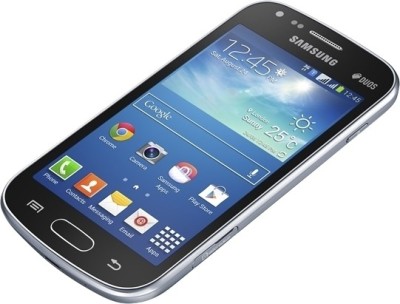
Samsung Galaxy S duos 2 specification and features :

4" TFT screen
1.2 GHz dual core processor
Android 4.2 jelly bean OS
5MP primary camera With LED flash
768 MB RAM
1500 mAh battery

Buy Galaxy S duos 2 from this link ,get 6% discount:


Here i have listed Some of Samsung android mobiles From price range Rupees 5000 to 10000.These mobiles mentioned above are good with its performance and i ask you guys not to go for Galaxy Trend and Galaxy S duos as they fail at its performance and due to negative feedback from the users.Please do me a favor by buying the mobile from the link specified above ,Thank you.

Search results :
Budget Samsung android mobiles below Rs.10000  
Samsung android mobile below 5000
Samsung android mobile below 10000
Samsung galaxy star gaming performance
Samsung galaxy budget android mobiles


Baca Selengkapnya ....

Boston moves 76,000 city employees, police, teachers and students to the cloud with Google Apps

Posted by Unknown 0 komentar


Editor's note: Today’s guest blogger is Bill Oates, Chief Information Officer of the City of Boston. See what other organizations that have gone Google have to say.

In November, the City of Boston was named the #1 Digital City in America by the Center for Digital Government. While this recognition is based on a variety of measures, a key element is the city’s efforts to engage and connect with constituents using mobile technology and social media. As a tech-savvy city, we’re always looking for the best IT tools to help our government run smarter, innovate more effectively and provide better services for our citizens. Our most recent innovation was the successful migration of 76,000 email accounts from a collection of our premise based systems, mostly Microsoft Exchange, to Google Apps. Not only are all city departments, including the Boston Police Department, now on Google Apps, but every teacher and more than 50,000 public school students each has an individual Google Apps account.

Our new unified, cloud-based communication system is pretty big change from our old set-up. Our agencies worked together to manage their mail environments, with resources focused on mail administration and working across the group structures. Our largest department, the public school district, operated on a very separate environment that was in need of a major technical upgrade.

As the city evaluated an upgrade to communication and collaboration infrastructure, we clearly saw cloud services as the most cost effective, supportable platform to address our future needs. In 2013, following an extensive review of the market, the city initiated a rigorous RFP process that attracted an wide array of bids, including multiple Microsoft and Google cloud offerings. A selection committee composed of members from our City IT organization, Boston Police, and Boston Public Schools evaluated 10 proposals based on both cost and technical capabilities. The committee unanimously chose Google Apps based on its ability to meet the needs of a fast moving city while providing a secure cloud environment.

Going Google on such a large scale has many benefits. We gained reliability and security compared to our prior configuration of Microsoft Exchange servers, which required extensive upkeep, upgrades and patches. The Boston Police department, for example, now has a reliable, scalable system that supports its 24/7 operation with Gmail’s 99.9% uptime guarantee. More than 3,000 police employees, including 2,100 sworn officers, use Google Apps to communicate with one another as well as to streamline reporting processes.

All in all, we’ve securely moved more than twenty million email messages to the cloud. Every city employee — from police, to education, public works, transportation and beyond — has a Google account and a boston.gov email address accessible from any device, anywhere. We are confident Google’s secure, FISMA-compliant cloud environment ensures that city data is safe and private.

The Google Apps platform now sits at the center of our drive to infuse innovation in every aspect of city government and enhance collaboration. After 20 years in office, Mayor Thomas Menino is departing – making way for incoming Mayor Marty Walsh, and we’re proud to hand the new administration the country’s most advanced, fully-functioning, cloud-based communications system to keep our city at the forefront of technology innovation.


Baca Selengkapnya ....

New partnership to bring Android to the open road

Posted by Unknown 0 komentar

In this multi-screen world, switching between our different devices should be easy and seamless. Common platforms allow for one connected experience across our phone, tablet and PC, so we get the right information at the right time, no matter what device we’re using. But there’s still an important device that isn’t yet connected as seamlessly to the other screens in our lives the car.

To help address that gap, today we’re announcing a new partnership that will bring Android, the world’s largest open platform, to the open road. Google has teamed up with automotive and technology leaders Audi, GM, Honda, Hyundai and Nvidia to form the Open Automotive Alliance (OAA), a global alliance aimed at accelerating auto innovation with an approach that offers openness, customization and scale.

Today, millions of people already bring Android phones and tablets into their cars, but it’s not yet a driving-optimized experience. Wouldn't it be great if you could bring your favorite apps and music with you, and use them safely with your car's built-in controls and in-dash display? Together with our OAA partners, we're working to enable new forms of integration with Android devices, and adapting Android for the car to make driving safer, easier and more enjoyable for everyone. Putting Android in the car will bring drivers apps and services they already know and love, while enabling automakers to more easily deliver cutting-edge technology to their customers. And it will create new opportunities for developers to extend the variety and depth of the Android app ecosystem in new, exciting and safe ways.

But this is just the beginning; we welcome other automotive and technology companies to join the OAA, to work together to build a common platform to drive innovation in the car and bring Android to the open road. Learn more about the OAA at openautoalliance.net, and stay tuned in 2014 for more updates coming soon to a car near you.

Posted by Patrick Brady, Director, Android Engineering

Baca Selengkapnya ....

More details about the HTC M8

Posted by Unknown Jumat, 03 Januari 2014 0 komentar
In a few months we'll most likely see new high-end device from HTC. Some of the current rumours were true, but here comes much more details you've never heard before!

Device will be named HTC One+ (codename: HTC M8) and it won't have any capacitive buttons. No more "home" or "back" buttons we get used to with the HTC One (HTC M7). Camera is probably a 6MP or 8MP module, of course with the UltraPixel™ technology and probably the new HTC ImageChip™ 3. Current rumours about double lens (for low and high lighting) might be true as well. Battery capacity is much bigger now - 2900 mAh instead of 2300 mAh in the HTC One. With just a slightly bigger screen in the HTC One+ (5") versus HTC One (4,7") we can expect much better battery life.

Chipset (SoC) is very likely to be Snapdragon 805 (instead of 800). This is a very good news because Snapdragon 800 is already quite an "old" chipset. The only problem is the drivers development by Qualcomm. Let's hope that won't stop HTC from replacing S800 with the S805.

In contrast to the HTC One, the One+ will have removable micoSD card. The non-removable microSD card in the HTC One was a source of a lot of critics from Android fans. Hopefully the design of the HTC M8 won't suffer from that.


HTC One+ will be equipped with the newest HTC Sense™ 6.0 and Android KitKat.

So what do you think? I'm already very excited and really can't wait for the HTC One successor. The HTC One won almost every award in the 2013 knocking out the competition. Let's hope the HTC One+ will repeat this great success!

To summarize:
  1. Name: HTC One+ (HTC M8)
  2. Screen: 5" FullHD 1080p covered by Gorilla Glass 3
  3. Battery: 2900mAh
  4. Camera: 6MP or 8MP with UltraPixel™ technology and double lens
  5. SoC: Qualcomm® Snapdragon™ 805
  6. RAM: 2GB LPDDR3
  7. Buttons: no capacitive buttons
  8. OS: Android KitKat with HTC Sense™ 6.0
  9. SIM: micro-SIM
  10. Front camera: 2.1MP
  11. NFC: yes
Have any questions or comments? Feel free to share! Also, if you like this article, please use media sharing buttons (Twitter, G+, Facebook) below this post!

Baca Selengkapnya ....
Trik SEO Terbaru support Online Shop Baju Wanita - Original design by Bamz | Copyright of android qvga.